


The complete guide
How to Choose a Big Dog Bed That Lasts
The problem with beds for big dogs
Most dog beds are made for medium dogs and sold to everyone. You buy one, your 80 lb dog flops onto it, and within a month the filling has compressed into a flat pancake. Your dog ends up lying on the floor with a thin layer of fabric in between. They start sleeping on the sofa instead, or on the cool tile by the back door, and the bed you bought sits in the corner collecting hair.
The second problem is mess. A big dog produces big amounts of hair, dust, drool and, in some houses, mud. A bed with a sewn-shut cover is a bed you can only vacuum. After a year it smells, and the only fix is a new bed.
A big dog bed that actually works has to solve both of those. It needs enough foam to carry real weight, and it needs a cover that comes off and goes in the machine.
How this bed is built
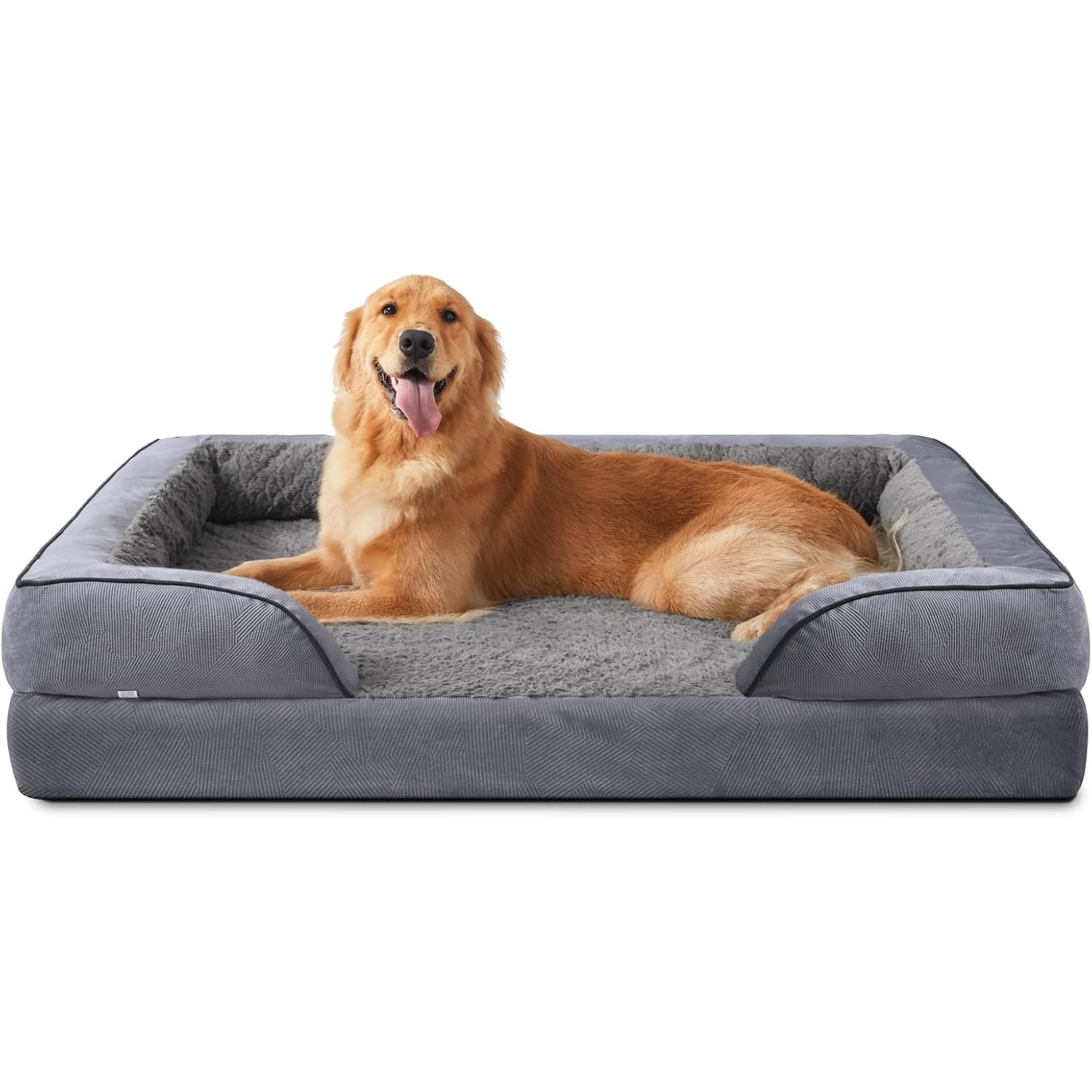
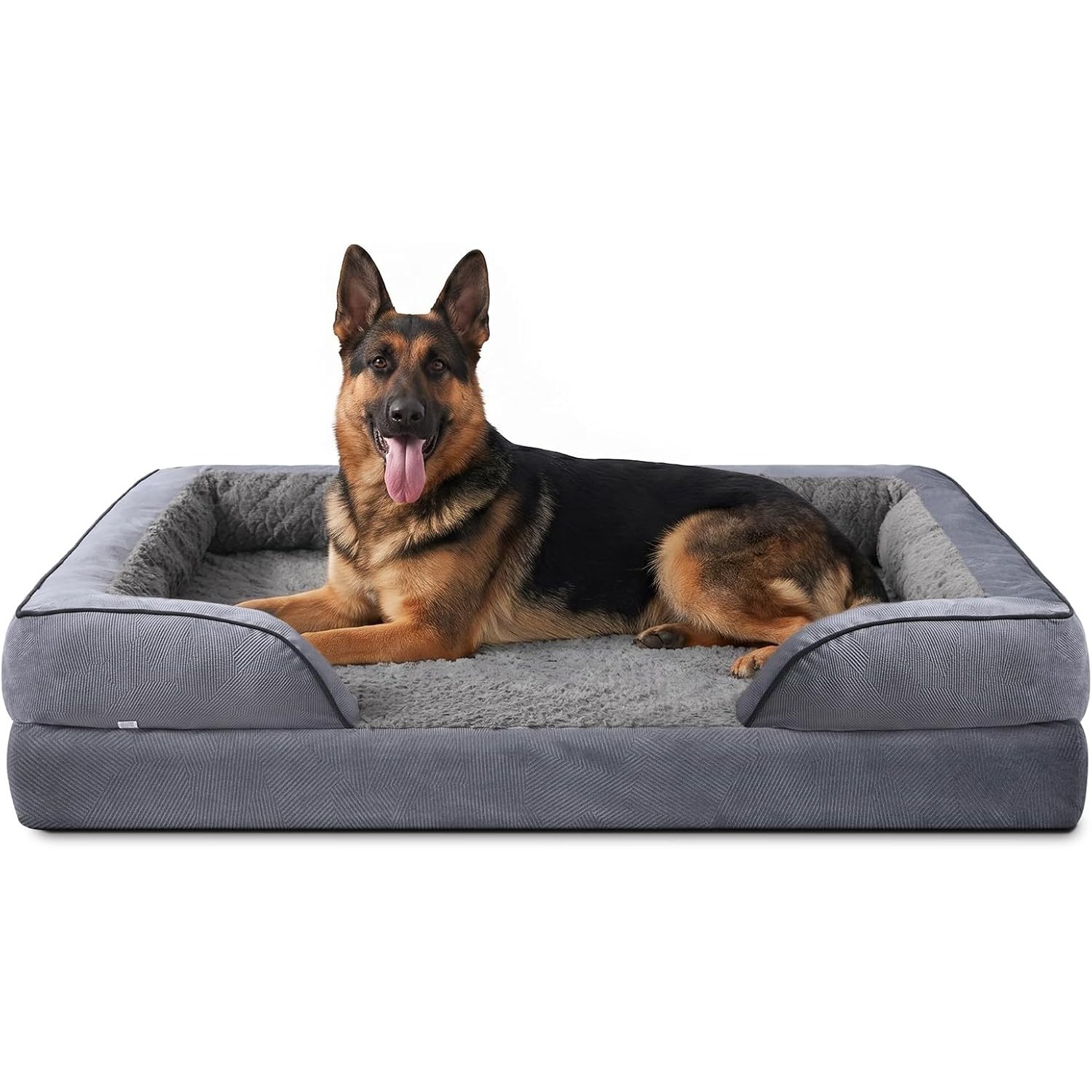
Start with the base, because that is where most beds fail. The sleeping base here is a slab of high-density egg-crate foam. Egg-crate means the foam is molded with a peaked, bumpy surface rather than a flat one. The peaks carry the load, and the valleys between them leave small air channels under the dog. Two things come out of that. Weight is spread across the whole base rather than concentrated under the hips and shoulders, and the surface breathes a little more than a solid pad.
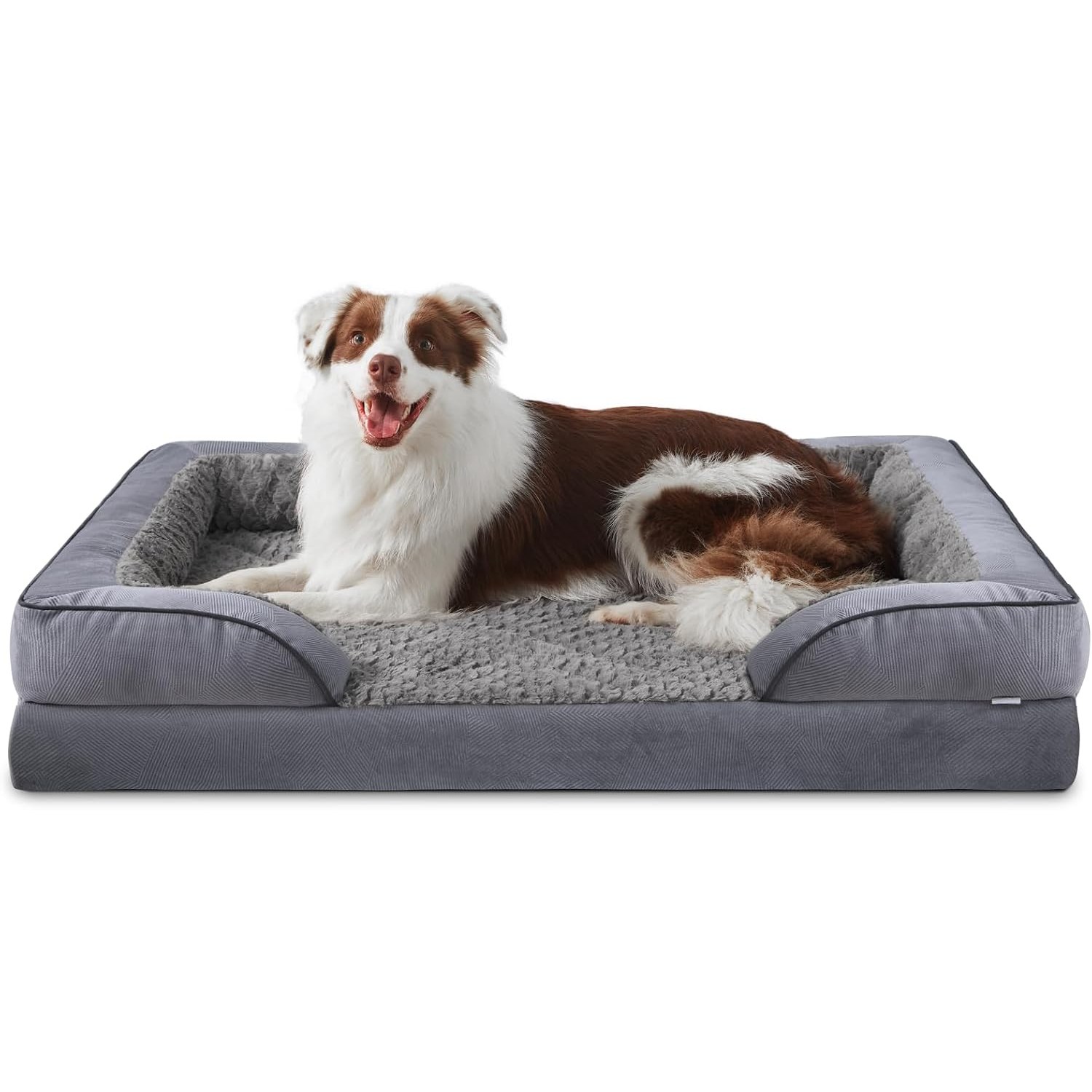
Around the outside is the bolster. It runs on four sides and stands about 3.5 inches high, filled with soft fiber rather than foam. The front section is lowered into a step-in opening, which is why the shape gets called a sofa or a C-shape chaise. That lowered front matters more than it sounds. A bolster all the way around looks cozy in photos but makes a big dog climb over an edge every time it gets up, and heavier or older dogs stop bothering.
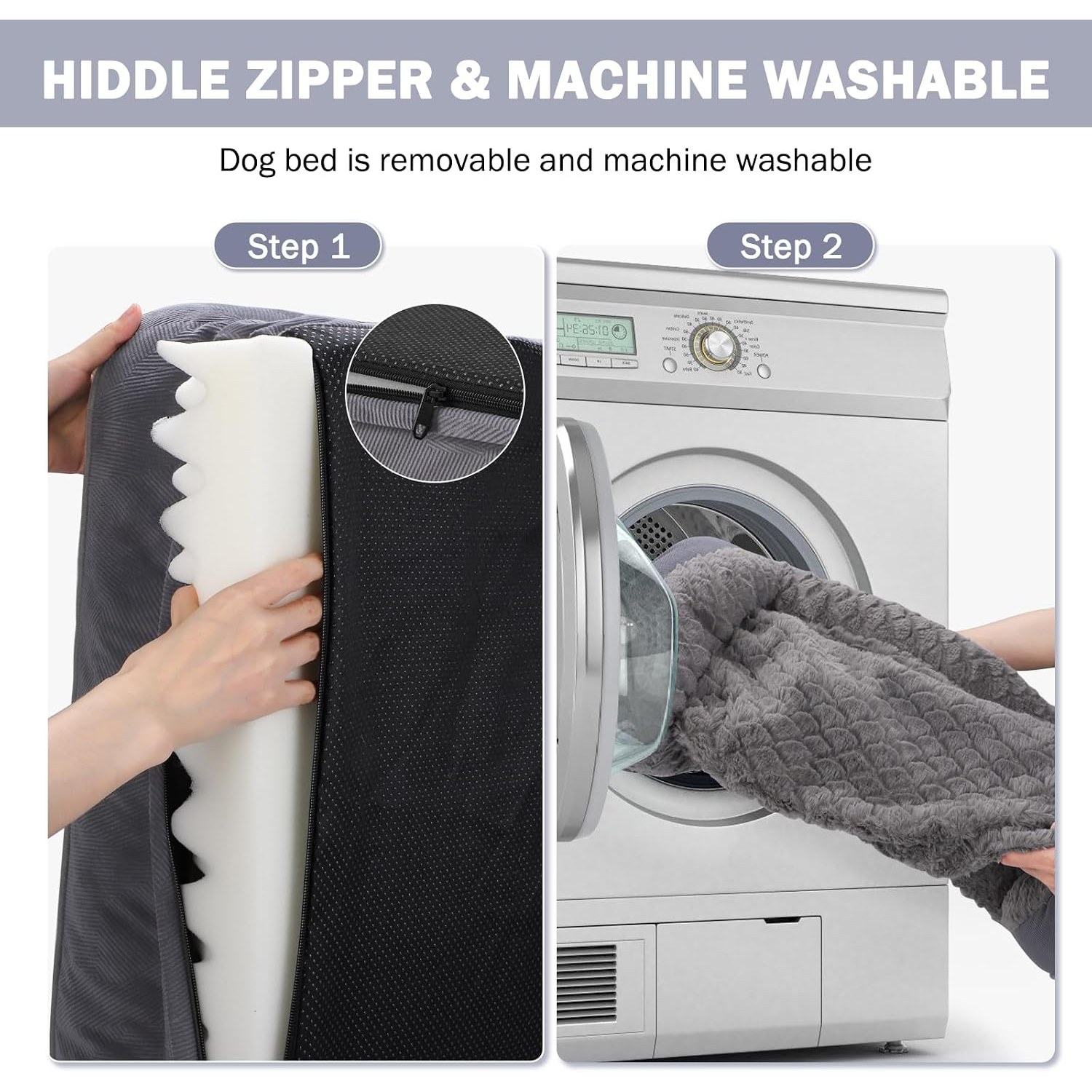
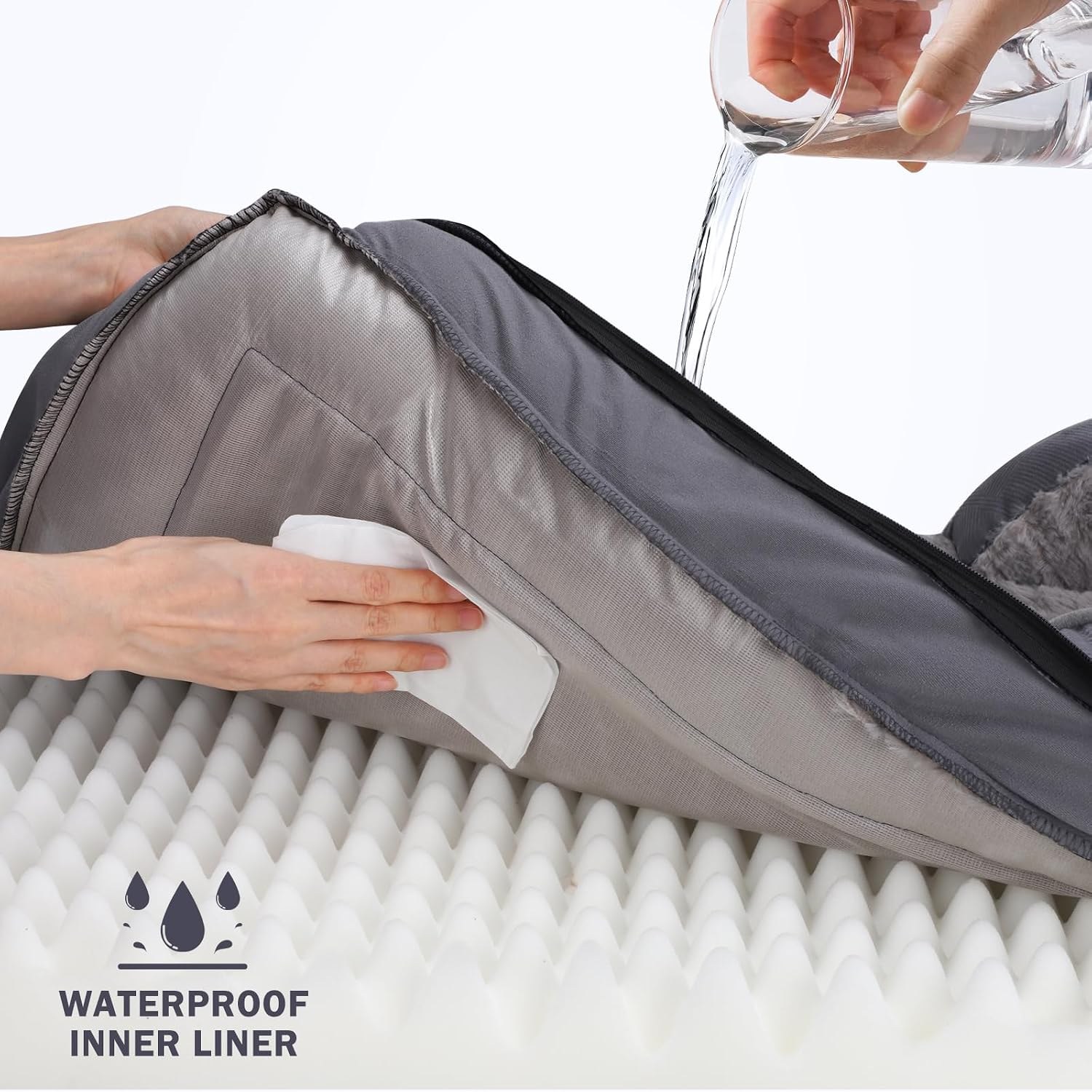
The cover is the practical part. It unzips and comes off completely for machine washing. Under it sits a waterproof inner lining that wraps the foam. If a water bowl gets knocked over, or a wet dog comes straight in from the yard, that lining is what stops the liquid getting into the foam core where it would sit and smell for weeks. Worth being clear on this point: the lining is waterproof, the bed is not. This is an indoor bed.
Two fabrics are used. The sleep surface is a soft plush with a fish-scale pattern chosen because it holds its fibers rather than shedding them. The outside is a tougher dark gray fabric that takes the day-to-day abuse. The underside is non-skid, so the bed grips hardwood and tile instead of sliding every time your dog jumps on.
Which dogs it suits
This is a bed for dogs that like to lean. If yours sleeps with a head on a cushion, props against the sofa arm, or shoves itself into a corner, the bolsters give it the edge it is looking for. Dogs that sleep curled up tend to use the bolster as a wall and tuck into the corner of the rectangle.
It also suits dogs that sprawl, provided you buy the right size. The foam base runs the full internal area, so a dog lying flat on its side still has support underneath. The bolsters are extra space, not the sleeping area, which is why outside dimensions can mislead you.
It suits households with hard floors, thanks to the non-skid base. It suits anyone whose dog sheds, because the cover washes. It does not suit outdoor kennels, covered patios in a wet climate, or dogs that treat fabric as something to dismantle. If your dog is a committed chewer, watch the seams in the first week.
Getting the size right
This is where people go wrong, so take two minutes with a tape measure.
Wait until your dog is lying on its side, fully stretched out, not curled. Measure from the tip of the nose to the base of the tail. That number is your dog's real sleeping length. Then compare it to the internal area rather than the outside size, because the bolsters eat into the footprint on all four sides.
The three options are Large at 35 x 25 x 6.5 inches, XL at 42 x 32 x 7 inches, and XXL at 48 x 35 x 7.5 inches. The maker rates them for dogs up to 50 lb, 80 lb and 120 lb. Weight ratings are a shortcut, though, and shape beats weight. A lanky 60 lb hound can be longer than a stocky 85 lb dog, so the measurement always wins.
If you land between two sizes, go up. A bed that is slightly too big is rarely a problem. A bed that is slightly too small gets half a dog on it and the other half on the floor, and that is how beds get abandoned.
Bed weights are useful if you plan to move it around. Large is 4.8 lb, XL is 7.1 lb and XXL is 8.7 lb, so any of them can be carried one-handed between the living room and the bedroom.
Where to put it
Dogs pick sleeping spots for reasons. Watch where yours already naps and put the bed there first, rather than where you would like the bed to live. Near you but out of the walkway is usually the sweet spot. Away from a draft, and not directly over a floor vent or next to a radiator.
Give it a week. Some dogs climb straight on, others circle it suspiciously for a few days. Putting a familiar blanket or an old t-shirt on top speeds things up because it makes the new bed smell like the rest of the house. Do not force the dog onto it, and do not use it as a time-out spot, or the bed becomes a punishment instead of somewhere good to sleep.
Keeping it clean
A washable dog bed cover only helps if you actually use it. A rhythm of every two to four weeks works for most homes, more often for long-haired dogs or dogs that go out in all weather.
Unzip the cover, pull it off, and machine wash it according to its care label. Air dry it rather than tumble drying on high, because heat is hard on both the fabric and the zipper. While the cover is off, wipe the waterproof lining with a damp cloth and a little mild soap, then let it dry fully before the cover goes back on. Never put the foam base in a washing machine.
Between washes, a vacuum with an upholstery head or a lint roller lifts most of the hair out of the plush. Rotating the foam base end for end every few weeks helps it wear evenly, in the same way you would rotate a mattress.
Trimming your dog's nails also helps. Fabric survives circling and pawing fine. What wears it out is a claw scratching the same square inch over and over.
The short version
If you have a big dog, hard floors, and no patience for a bed that flattens in two months, this covers the basics well. The egg-crate foam base spreads weight rather than collapsing, the bolsters give a head rest and something to lean on, the lowered front makes getting in easy, and the cover comes off and washes.
Three sizes mean most big breeds are covered, from a 50 lb dog in the Large up to a 120 lb dog in the XXL. Measure your dog stretched out before you order and round up if you are between sizes.
Remember it is an indoor bed, the waterproof part is the inner lining and not the whole thing, and no fabric bed is chew proof. Within those limits, it is a straightforward, practical place for a large dog to sleep.